Which GeDiPNet Analysis Tool Should I Use?
GeDiPNet has four separate analysis tools, and it's not always obvious which one fits a given question. This guide walks through what each tool actually answers and what you get back — so you can go straight to the right one.
The four tools at a glance
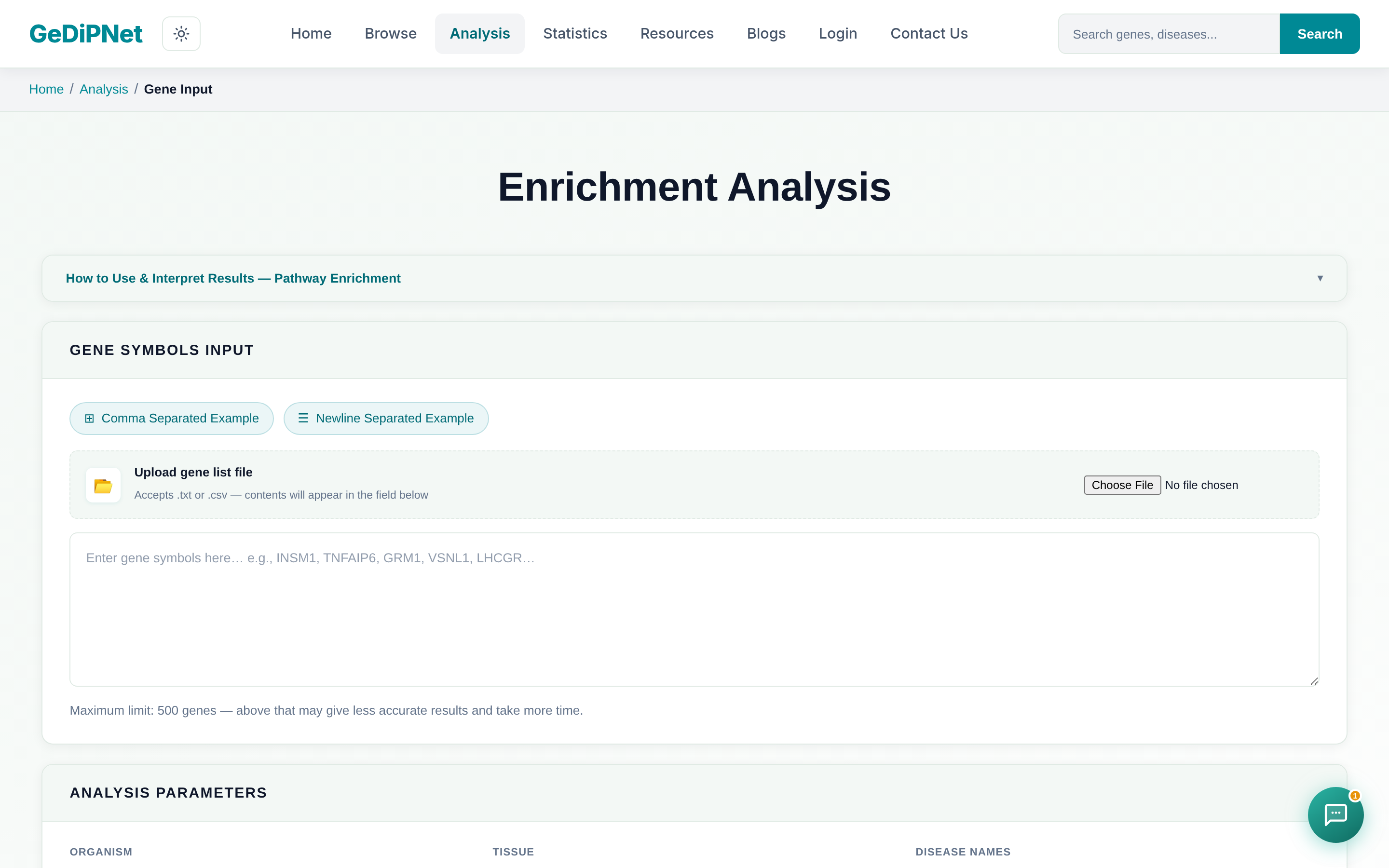
Enrichment analysis
Answers: "Given this gene list, which diseases, pathways, or tissues is it significantly linked to?" Run disease or pathway enrichment right after generating a gene list from an experiment.
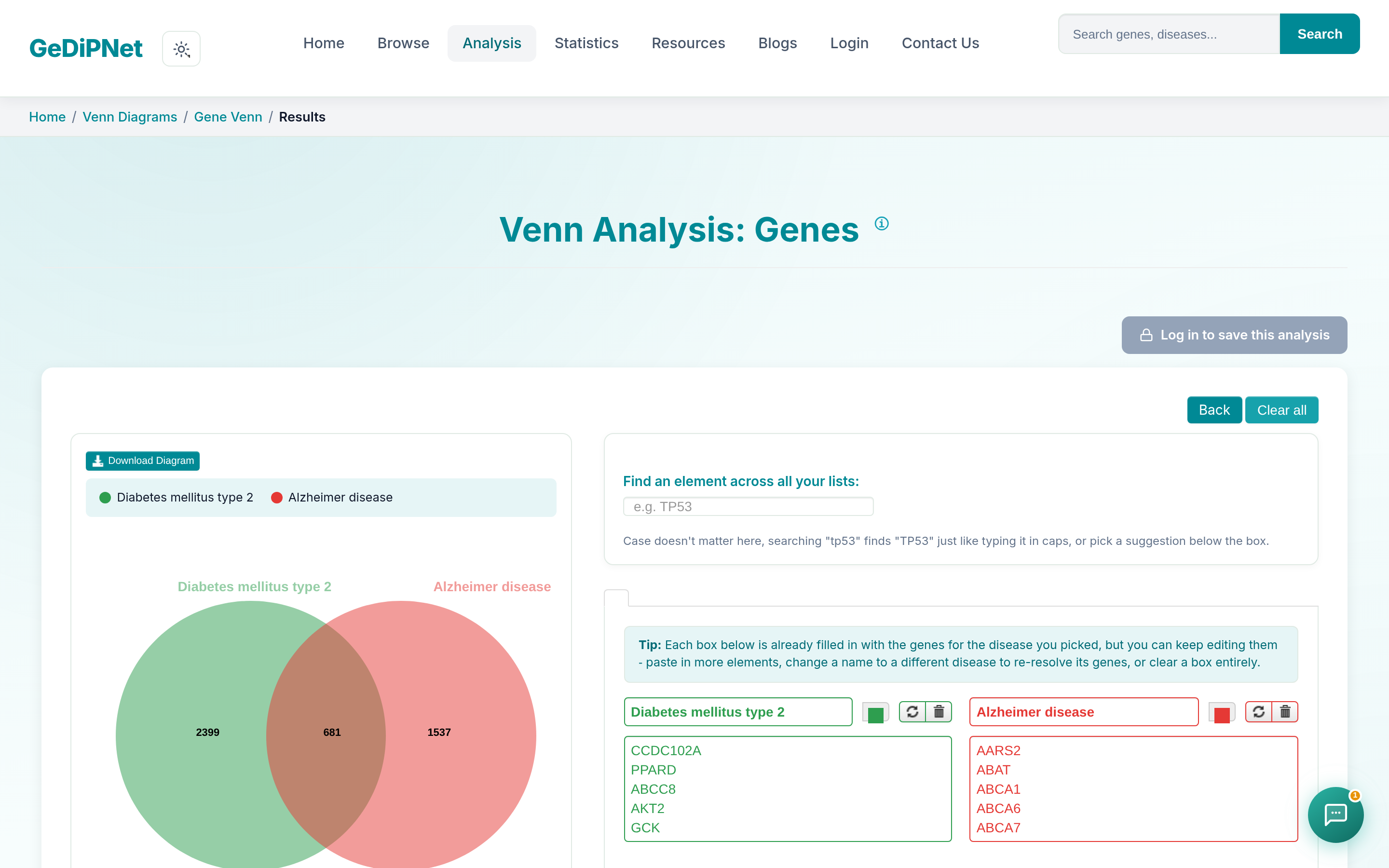
Venn analysis
Answers: "What overlaps and what's unique across up to 6 sets of genes, pathways, ontologies, or domains?" Use Venn analysis when comparing sets directly rather than testing significance.
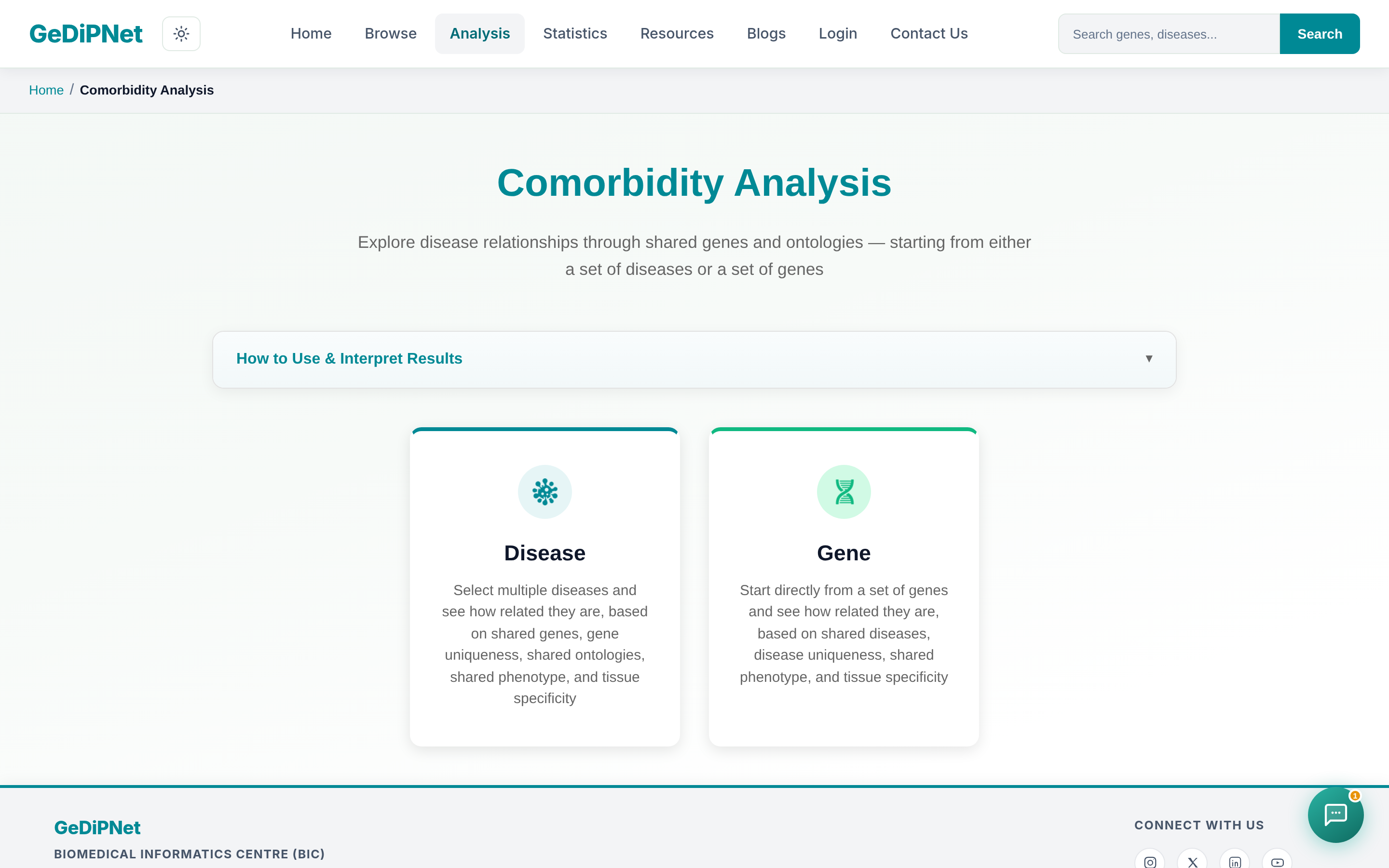
Comorbidity prediction
Answers: "How related are these diseases (or genes), based on what they share biologically?" Read the full walkthrough in our comorbidity analysis guide.
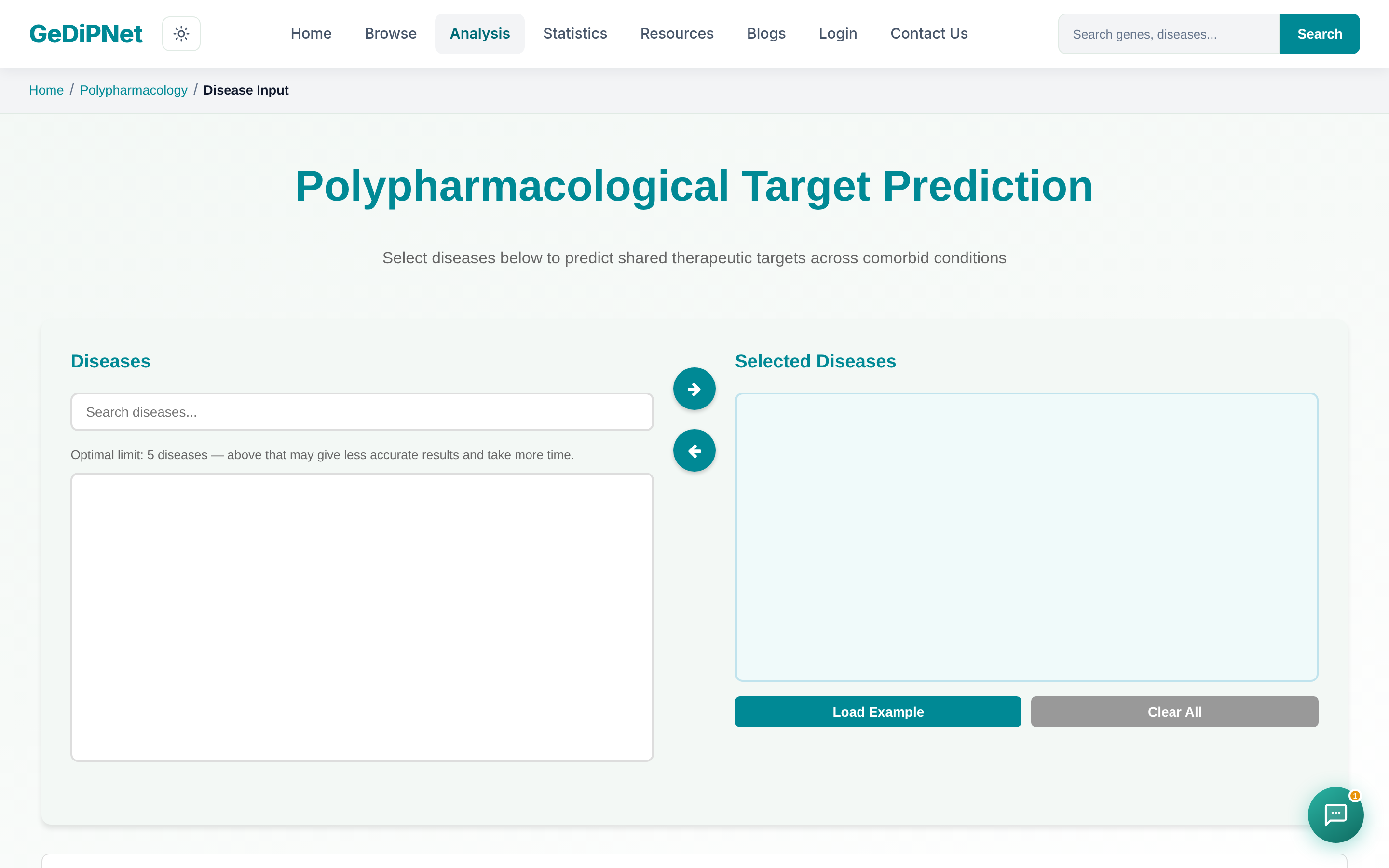
Polypharmacological target prediction
Answers: "For a set of comorbid diseases, which shared genes or pathways make good multi-target drug candidates?" The natural next step after comorbidity analysis has identified related diseases.
Quick comparison
| Tool | Question it answers | Input |
|---|---|---|
| Enrichment analysis | What is this gene list collectively linked to? | A gene list |
| Venn analysis | What overlaps between these sets? | 2–6 gene/pathway/ontology sets |
| Comorbidity prediction | How related are these diseases or genes? | A list of diseases or genes |
| Polypharmacological target prediction | What shared targets could treat multiple comorbid diseases at once? | A set of comorbid diseases |
Still not sure which fits your question? Ask GeDiPNet's chat assistant directly — see our guide on searching with plain-language questions — or reach out via Contact Us. Want to see these tools used together on a real question? Read our complete case study.